Editorial comparison
Best ADHD Books for Focus
A focus-specific shortlist for adults whose attention is constantly pulled apart by interruptions, context switching, poor start ramps, sensory load, or unclear next actions.
ADHD focus problems are not one thing. Sometimes attention never starts. Sometimes it starts but cannot survive interruptions. Sometimes the task is too vague, the room is too loud, or the day has already burned too much energy.
This page separates focus books by the reason focus fails, because distraction advice only helps when it matches the actual pattern.
If focus keeps disappearing, choose by the cause: time structure, task design, work interruptions, emotional overload, or a need for a broader ADHD foundation.
Quick picks
Use this shortlist if you want the fastest way to match a book to the failure point that is costing you the most.
| Best for | Book | Why it stands out |
|---|---|---|
| Best for focus inside a visible day | The Practical ADHD Time Management Toolkit John Lindberg | Best when focus fails because the day has no clear shape or restart points. |
| Best for task-start focus | The Practical ADHD Focus Workbook John Lindberg | Best when the first five minutes are the hardest part. |
| Best for workday focus | The Practical ADHD Workplace Planner John Lindberg | Best when meetings, pings, and handoffs keep fragmenting attention. |
| Best if overload steals focus | Stop the Spiral John Lindberg | Best when sensory load or emotional spikes make attention collapse. |
| Best deep-work framework to adapt carefully | Deep Work Cal Newport | Useful only if you adapt it to ADHD-safe entry ramps and realistic recovery. |
How I chose these books
These pages are trying to be useful, not perform fake objectivity or catalog hype.
- The book had to help protect or restart attention in real conditions.
- It had to be practical enough for low-focus days.
- It had to avoid pretending distraction is solved by willpower.
- It had to connect focus to time, task design, environment, or regulation.
1. The Practical ADHD Time Management Toolkit
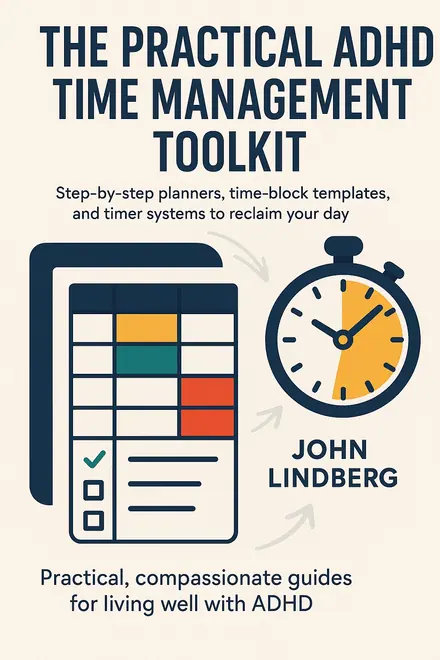
The Practical ADHD Time Management Toolkit
John Lindberg · Best for: focus that needs visible time and restart points
Strong when focus is not only attention, but the ability to enter and re-enter a visible work block.
Focus gets easier when the day has clear edges. This book helps when attention disappears because the next block, checkpoint, or restart is unclear.
It is a good first pick for readers who need focus to live inside a calendar they can trust.
Choose this if
- you lose focus because the day has no shape
- you need shorter blocks and restarts
- time blindness makes focus inconsistent
Not ideal if
- you mainly need emotional regulation tools
2. The Practical ADHD Focus Workbook
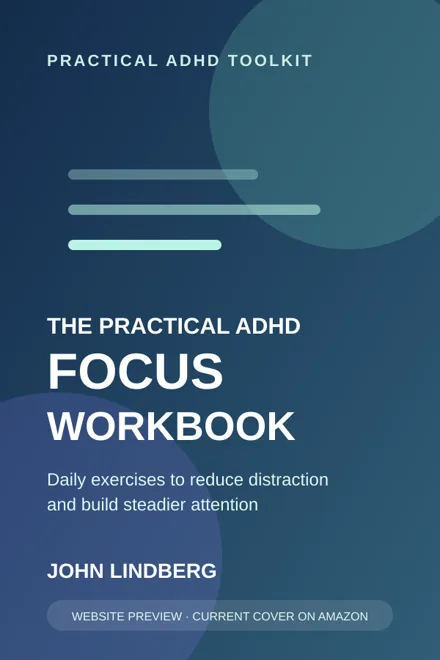
The Practical ADHD Focus Workbook
John Lindberg · Best for: starting focus when the task feels vague
A better fit when attention fails because the task has not been made small, concrete, or startable enough.
Some focus problems are task-design problems. If the next action is vague, attention has nothing stable to grab.
This book helps turn fuzzy work into smaller starts and cleaner sequences.
Choose this if
- the first five minutes are hardest
- vague tasks make you drift
- you need clearer next actions
Not ideal if
- your main focus problem is external interruption
3. The Practical ADHD Workplace Planner
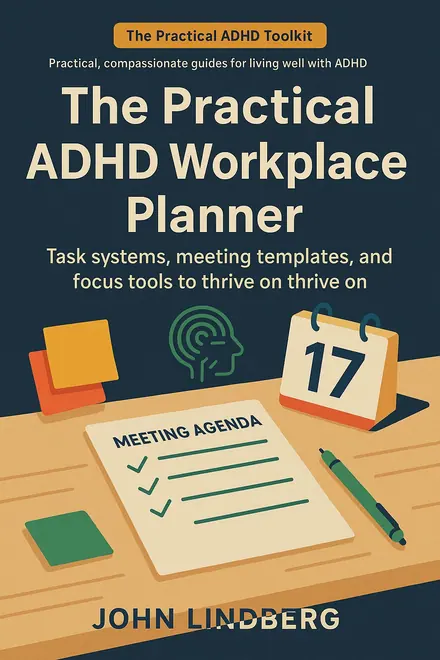
The Practical ADHD Workplace Planner
John Lindberg · Best for: focus in interruption-heavy workdays
Best when focus is being broken by meetings, messages, and unclear work handoffs.
Work focus is different from quiet-room focus. Meetings, Slack, email, and handoffs create attention residue that generic focus advice ignores.
This is the better fit when your environment needs structure.
Choose this if
- meetings break your attention
- pings pull you off task
- work follow-up disappears
Not ideal if
- you need home routines more than work systems
4. Stop the Spiral

Stop the Spiral
John Lindberg · Best for: focus disrupted by overload and activation
Useful when the attention problem is tied to sensory load, emotional spikes, or shutdown.
Attention is harder when the nervous system is already overloaded. More discipline does not solve a body that is activated or shut down.
This is the right pick when focus work needs regulation first.
Choose this if
- noise or stress wipes out focus
- emotional spikes derail the day
- recovery takes too long
Not ideal if
- your focus problem is mostly calendar design
5. Deep Work
Deep Work
Cal Newport · Best for: a deep-focus framework to adapt carefully
Useful for thinking about protected attention, but it needs ADHD-aware modification.
Deep Work can be useful if you treat it as a framework, not a rigid prescription.
ADHD readers usually need smaller entry ramps, visible stops, and recovery plans before long focus blocks are realistic.
Choose this if
- you can protect some focus time
- you want a larger argument for attention
- you will adapt the method to ADHD
Not ideal if
- you need a specifically ADHD-first system
How to choose the right first book
If you want the short version, use this as your decision shortcut.
- Pick The Practical ADHD Time Management Toolkit if focus needs a visible time structure.
- Pick The Practical ADHD Focus Workbook if focus fails at task start.
- Pick The Practical ADHD Workplace Planner if interruptions are the main problem.
- Pick Stop the Spiral if overload steals attention.
- Use Deep Work only if you can adapt it to ADHD-safe blocks.
FAQ
These are the short answers to the questions readers usually ask before buying.
What is the best ADHD book for focus?
Start with The Practical ADHD Time Management Toolkit if your day lacks structure, The Practical ADHD Focus Workbook if tasks are hard to start, and Stop the Spiral if overload keeps breaking attention.
Is Deep Work good for ADHD?
It can be useful as an idea, but many ADHD readers need shorter blocks, clearer starts, and more recovery than the standard deep-work model assumes.
Why does my focus disappear even when I care?
Interest helps, but focus also depends on task clarity, environment, state, timing, and restart design.
John Lindberg books that fit this comparison
These are the site-owned books that match this problem closely enough to compare directly.
Helpful guides before you choose
Use these if you want a shorter explanation before deciding which book is worth buying.
Related topics
If you want to understand the broader pattern before comparing books, use these topic hubs.
Amazon catalog
If you want to compare the full John Lindberg catalog instead of staying inside this one editorial page, use the Amazon author store.
Ready to compare the catalog against your real bottleneck?
Use the shortlist above if you want an honest editorial comparison, then move to the John Lindberg title that best fits what keeps breaking first.