Editorial comparison
Best ADHD Books for Partners
A partner-focused shortlist for people who want to understand ADHD patterns, reduce conflict loops, and build shared systems without turning themselves into the manager.
Partners often need a different starting point than the person with ADHD. The question is not only what ADHD feels like internally, but how both people can talk, plan, repair, and share responsibility without blame.
This page is separate from the broader relationship page because it is written for the partner's decision: what should I read first if I want to understand and support without taking over?
If you are the partner, choose by the relationship need: communication, shared planning, emotional repair, adult ADHD basics, or practical household systems.
Quick picks
Use this shortlist if you want the fastest way to match a book to the failure point that is costing you the most.
| Best for | Book | Why it stands out |
|---|---|---|
| Best direct partner/couple pick | The ADHD Couple’s Guide John Lindberg | Best for scripts, repair, shared planning, and fair-play systems. |
| Best adult ADHD foundation | Taking Charge of Adult ADHD Russell A. Barkley | Useful when the partner needs a structured explanation of adult ADHD patterns. |
| Best friendly overview | How to ADHD Jessica McCabe | Good if the partner needs language and empathy before systems. |
| Best if emotional spikes drive conflict | Stop the Spiral John Lindberg | Best when repair and regulation matter as much as logistics. |
| Best if late diagnosis changed the relationship story | Unmasking Adult ADHD John Lindberg | Best when old patterns need reinterpretation before new agreements will stick. |
How I chose these books
These pages are trying to be useful, not perform fake objectivity or catalog hype.
- The book had to help with practical communication or shared systems.
- It had to avoid framing the partner as a parent, therapist, or project manager.
- It had to support repair after conflict without blame loops.
- It had to be useful even when only one person reads it first.
1. The ADHD Couple’s Guide
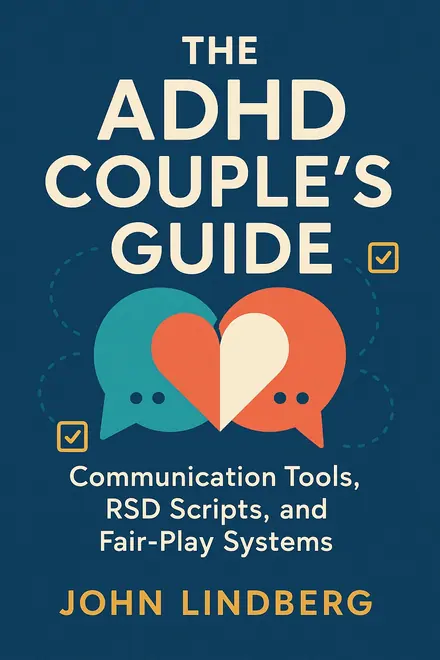
The ADHD Couple’s Guide
John Lindberg · Best for: communication, repair, and shared systems
The clearest first pick for partners because it is built around couple-level friction rather than solo ADHD self-management.
This book is the strongest fit when the partner wants scripts, shared planning, fair-play systems, and repair tools that can be used in ordinary home life.
It is useful when the same argument keeps repeating because agreements live in memory, emotional recovery is slow, or both people feel alone with the workload.
Choose this if
- communication loops keep repeating
- household handoffs are unclear
- you need repair scripts and shared systems
Not ideal if
- you only want a clinical overview of ADHD
2. Taking Charge of Adult ADHD
Taking Charge of Adult ADHD
Russell A. Barkley · Best for: adult ADHD fundamentals for partners
A structured foundation when the partner needs to understand the adult ADHD pattern before choosing relationship tools.
This is useful when a partner wants a clear adult ADHD explanation instead of vague reassurance or blame.
It can help separate symptoms, systems, and responsibility so the couple has better language for what needs to change.
Choose this if
- you need adult ADHD basics
- the pattern is still confusing
- you want structure before scripts
Not ideal if
- you need couple-specific exercises immediately
3. How to ADHD
How to ADHD
Jessica McCabe · Best for: accessible empathy and everyday language
A friendly first read when the partner needs an easier bridge into ADHD experience and practical support.
This is a good entry point when dense books would stall the conversation.
It helps partners understand why ordinary advice can fail and why supports need to be designed differently.
Choose this if
- you need a low-friction first read
- you want language without jargon
- empathy needs to come before system design
Not ideal if
- you want a narrow couple workbook
4. Stop the Spiral

Stop the Spiral
John Lindberg · Best for: emotional spikes, shutdown, and repair windows
Best when the relationship keeps getting pulled into overload, shutdown, or long recovery after hard conversations.
A partner can understand the plan and still struggle if conflict pushes one or both people into overload.
This book is a useful companion when the couple needs calmer reset points before practical agreements can hold.
Choose this if
- arguments escalate fast
- shutdown or flooding delays repair
- recovery tools are missing
Not ideal if
- the main problem is only shared calendar setup
5. Unmasking Adult ADHD
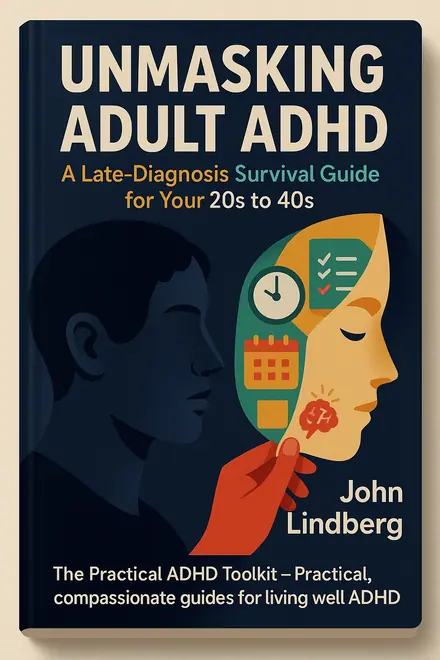
Unmasking Adult ADHD
John Lindberg · Best for: late diagnosis and reinterpreting old patterns
Useful when ADHD has changed the couple's story and both people need to understand hidden effort, masking, and shame.
Late diagnosis can make partners revisit years of conflict, missed signals, and hidden effort.
This book helps when the first work is making sense of the pattern before pushing for a new system.
Choose this if
- diagnosis came late
- old fights need a new explanation
- masking and shame are part of the relationship load
Not ideal if
- you need a direct shared-planning workbook first
How to choose the right first book
If you want the short version, use this as your decision shortcut.
- Pick The ADHD Couple’s Guide if the problem is communication, repair, and shared systems.
- Pick Taking Charge of Adult ADHD if you need adult ADHD fundamentals first.
- Pick How to ADHD if you need an easier empathy-building entry point.
- Pick Stop the Spiral if emotional flooding or shutdown keeps delaying repair.
- Pick Unmasking Adult ADHD if late diagnosis changed the relationship story.
Choose a reading job from one household situation
These two fictional household scenarios are original website exercises, not passages from the books below. Use them to distinguish a handoff that lacks a visible next step from a conversation that has not yet produced an agreement. Neither situation tells you what a partner thinks or why something happened.
Scenario one: the parcel is ready, but the return is still open
Try first: A return parcel is packed beside the door. The instructions have not been checked, and neither person has accepted the drop-off. Write three separate states: ‘packed’, ‘return method to check’ and ‘drop-off owner to agree’. Then ask who can accept the next action. Being near the door does not establish an owner or prove the return happened.
Look for in a book: Shared-planning or household-handoff examples that separate an accepted responsibility, the next observable action and a checked finish. A new reminder alone will not resolve an action that nobody has accepted. Check the actual return instructions before adding a date.
Scenario two: the calendar entry exists, but agreement is missing
Try first: One partner added ‘clear the kitchen after dinner’ to a calendar; the other had not agreed to that time or scope. Start with the observable fact: ‘This entry was added before we checked it together.’ Ask what each person understood and what could be agreed now. Leave the responsibility open until both have checked the proposed action; a calendar entry cannot stand in for that conversation.
Look for in a book: Communication or repair examples that distinguish a request, an assumption and an agreement. Look for a way to check understanding and return to an unfinished conversation, rather than a script that claims to know another person's motives. If the conversation remains open, record the question instead of labelling it resolved.
Decide which kind of example you need to read next
Try first: If the parcel situation is closest, write ‘I need a shared handoff with an accepted owner and a checkable finish.’ If the calendar situation is closest, write ‘I need to check what was understood before planning the task.’ Choose that one reading job first; the two situations may need different steps even when they involve the same household.
Look for in a book: For the existing couple-focused option, compare The ADHD Couple’s Guide's listed communication, repair and shared-planning scope with your chosen job. Use the shortlist's foundation options when your first need is general adult ADHD information. Check the actual book description and any available sample; these fictional exercises do not verify a book's interior or promise a relationship result.
Take one question to the existing shortlist: ‘Does this book explain the next step I need?’ Keep ‘paper or parcel prepared’, ‘responsibility agreed’ and ‘task checked complete’ separate. Reading can give you material to discuss; it cannot establish another person's consent or finish the household action.
FAQ
These are the short answers to the questions readers usually ask before buying.
What is the best ADHD book for partners?
Start with The ADHD Couple’s Guide if you need communication scripts, repair tools, and shared systems. Start with Taking Charge of Adult ADHD if you need the adult ADHD foundation first.
Should the partner read ADHD books alone?
It can help, but the goal is not to become the manager. Use the book to build shared language and choose one small agreement to test together.
How is this different from the relationships page?
This page is written for the partner's first-read decision. The broader relationships page covers relationship and communication needs from both sides.
John Lindberg books that fit this comparison
These are the site-owned books that match this problem closely enough to compare directly.
Helpful guides before you choose
Use these if you want a shorter explanation before deciding which book is worth buying.
Related topics
If you want to understand the broader pattern before comparing books, use these topic hubs.
Amazon catalog
If you want to compare the full John Lindberg catalog instead of staying inside this one editorial page, use the Amazon author store.
Ready to compare the catalog against your real bottleneck?
Use the shortlist above if you want an honest editorial comparison, then move to the John Lindberg title that best fits what keeps breaking first.