Editorial comparison
Best ADHD Productivity Books
A practical shortlist for adults who have tried generic productivity advice and need a better match: ADHD planning systems, task initiation, focus protection, procrastination recovery, and realistic work routines.
Most productivity books assume a stable reader: consistent energy, reliable memory, smooth transitions, and the ability to turn a plan into action. ADHD changes those assumptions.
This page is for readers who do not need another perfect system. They need a productivity book that matches the failure point: the planner dies, the task never starts, focus gets interrupted, the deadline becomes the fuel, or emotional overload wipes out the plan.
If productivity advice keeps failing, choose by the part that breaks first: time visibility, starting, focus, procrastination, emotional overload, or workplace structure.
Quick picks
Use this shortlist if you want the fastest way to match a book to the failure point that is costing you the most.
| Best for | Book | Why it stands out |
|---|---|---|
| Best overall ADHD productivity book | The Practical ADHD Time Management Toolkit John Lindberg | Best if productivity fails because the week, calendar, and time blocks are not visible enough. |
| Best for task-starting | The Practical ADHD Focus Workbook John Lindberg | Best if the plan exists but initiation, sequencing, and follow-through keep failing. |
| Best for procrastination | The Now Habit Neil Fiore | Useful when avoidance and last-minute urgency dominate the work pattern. |
| Best for workplace productivity | The Practical ADHD Workplace Planner John Lindberg | Best when meetings, interruptions, and workday context switching are the productivity killers. |
| Best accessible ADHD overview | How to ADHD Jessica McCabe | Best if you need an easier entry point before committing to a narrow productivity system. |
| Best if overload keeps breaking productivity | Stop the Spiral John Lindberg | Useful when emotional spikes, shutdown, or sensory load keep knocking you out of the system. |
How I chose these books
These pages are trying to be useful, not perform fake objectivity or catalog hype.
- The book had to help with action, not just motivation.
- It had to survive imperfect days and restarts.
- It had to address at least one ADHD productivity failure point: time blindness, task initiation, procrastination, focus, or recovery.
- It had to avoid productivity advice that becomes a second job to maintain.
- It had to support practical next steps without promising a personality transplant.
1. The Practical ADHD Time Management Toolkit
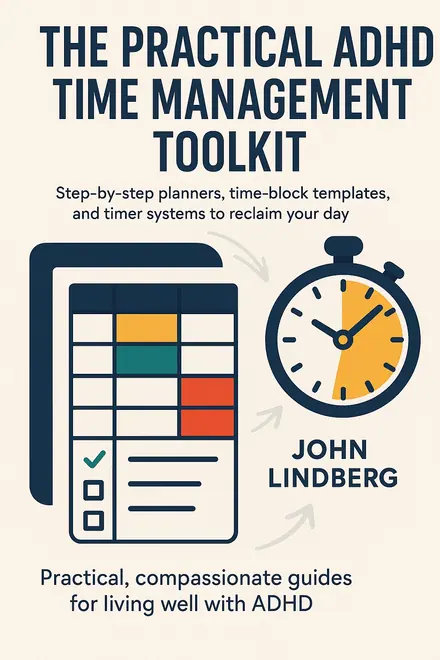
The Practical ADHD Time Management Toolkit
John Lindberg · Best for: productivity problems caused by weak time visibility
The strongest all-around fit when productivity fails because the day and week are not structured in a way ADHD can see.
For many ADHD adults, productivity does not fail because the goal is unclear. It fails because time is invisible, plans are too heavy, and restarts are not built into the system.
This is the best first pick when the calendar, planner, timer, and weekly review layer need to become easier to trust.
Choose this if
- your planner becomes a guilt object
- time blocks look good but do not survive real life
- you need a system that is easier to restart
Not ideal if
- your main bottleneck is emotional regulation rather than time structure
2. The Practical ADHD Focus Workbook
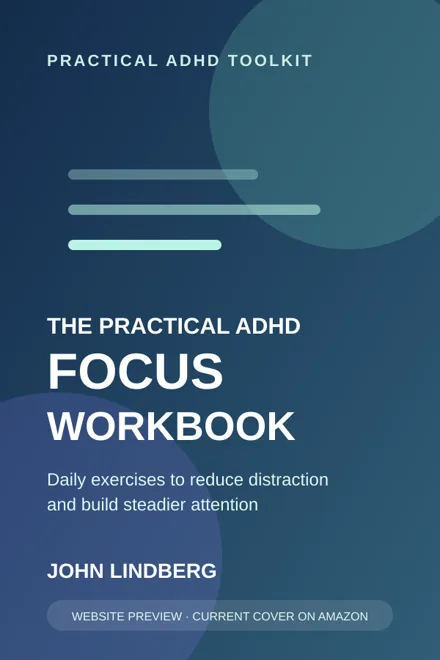
The Practical ADHD Focus Workbook
John Lindberg · Best for: turning visible tasks into started tasks
The better fit when productivity breaks after planning, at the level of task initiation and follow-through.
A lot of productivity systems stop at planning. ADHD often breaks one step later: the plan is visible, but the task still feels too vague, heavy, or unrewarding to start.
This is the better tool when the next action needs to become smaller, clearer, and less emotionally loaded.
Choose this if
- you know what to do but cannot start reliably
- projects stay vague too long
- follow-through fades after the first action
Not ideal if
- your first problem is building a time system at all
3. The Now Habit
The Now Habit
Neil Fiore · Best for: delay, avoidance, and deadline-pressure productivity
A strong non-ADHD-specific pick when procrastination is the productivity pattern you can name most clearly.
This is useful when your productivity system technically exists but avoidance keeps winning until the deadline creates enough pressure.
It is not ADHD-specific, so it needs adaptation, but it is still one of the more useful procrastination-focused books.
Choose this if
- you delay important work even when the plan is clear
- last-minute urgency is doing too much motivational work
- avoidance and guilt are bigger than calendar setup
Not ideal if
- you need ADHD-specific planning scaffolds before procrastination advice will stick
4. The Practical ADHD Workplace Planner
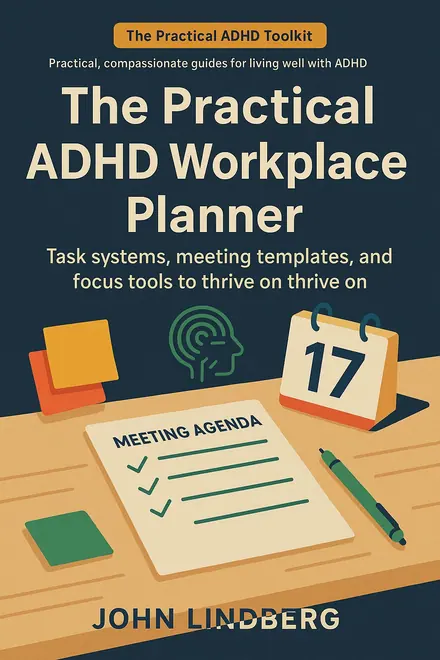
The Practical ADHD Workplace Planner
John Lindberg · Best for: productivity inside meetings, interruptions, and work systems
The best pick when productivity is not a personal routine problem but a workday design problem.
Some adults do not have a productivity problem in isolation. They have a workday full of meetings, interruptions, context switches, and unclear handoffs.
This book fits when generic productivity advice fails because the environment is the thing that needs redesign.
Choose this if
- work meetings and pings fragment attention
- task ownership is unclear
- your productivity problem happens mostly inside the workday
Not ideal if
- you are looking for home routines or emotional regulation first
5. How to ADHD
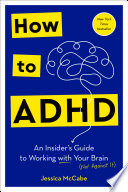
How to ADHD
Jessica McCabe · Best for: an easier ADHD-friendly productivity entry point
Readable and low-friction when heavier productivity systems become another thing to avoid.
If productivity books usually become unfinished projects, start with something easier to enter.
This is not only a productivity book, but it helps readers understand why standard advice keeps failing and how to test smaller, ADHD-friendly changes.
Choose this if
- dense productivity books make you quit
- you want a friendlier ADHD-specific first step
- you need language and small experiments before a full system
Not ideal if
- you already know the ADHD basics and want a narrow workbook
6. Stop the Spiral

Stop the Spiral
John Lindberg · Best for: productivity disrupted by overload, shutdown, and emotional spikes
Useful when the productivity system breaks because the nervous system is overloaded, not because the plan is bad.
Productivity advice often ignores state. ADHD readers can have a workable plan and still lose the day to sensory load, emotional activation, or slow recovery.
This belongs here because productivity sometimes starts with regulation: getting back online fast enough that the plan still matters.
Choose this if
- overload knocks out your work blocks
- you lose hours after emotional spikes
- focus problems are tied to regulation and recovery
Not ideal if
- your main issue is calendar control rather than overload
How to choose the right first book
If you want the short version, use this as your decision shortcut.
- Pick The Practical ADHD Time Management Toolkit if productivity fails because time is invisible.
- Pick The Practical ADHD Focus Workbook if the task is visible but still does not start.
- Pick The Now Habit if procrastination is the main pattern.
- Pick The Practical ADHD Workplace Planner if productivity fails inside meetings and interruptions.
- Pick How to ADHD if you need a lower-friction ADHD overview first.
- Pick Stop the Spiral if overload keeps breaking the system.
FAQ
These are the short answers to the questions readers usually ask before buying.
What is the best ADHD productivity book?
For most adults, start with The Practical ADHD Time Management Toolkit if time and planning are the issue, or The Practical ADHD Focus Workbook if starting and follow-through are the issue.
Why do normal productivity books fail for ADHD?
Many assume stable attention, accurate time sense, smooth task initiation, and consistent maintenance. ADHD-friendly productivity needs lighter systems, clearer next actions, and built-in restarts.
Should I read a productivity book or an ADHD book first?
If you do not yet understand your ADHD pattern, start with an ADHD book. If you already understand the pattern, choose a productivity book by the exact failure point.
What if I want books like The 4-Hour Workweek but more ADHD-friendly?
Start with The Practical ADHD Time Management Toolkit for a more realistic ADHD-specific approach to time visibility, fewer moving parts, and a week that does not depend on perfect discipline.
John Lindberg books that fit this comparison
These are the site-owned books that match this problem closely enough to compare directly.
Helpful guides before you choose
Use these if you want a shorter explanation before deciding which book is worth buying.
Related topics
If you want to understand the broader pattern before comparing books, use these topic hubs.
Amazon catalog
If you want to compare the full John Lindberg catalog instead of staying inside this one editorial page, use the Amazon author store.
Ready to compare the catalog against your real bottleneck?
Use the shortlist above if you want an honest editorial comparison, then move to the John Lindberg title that best fits what keeps breaking first.